




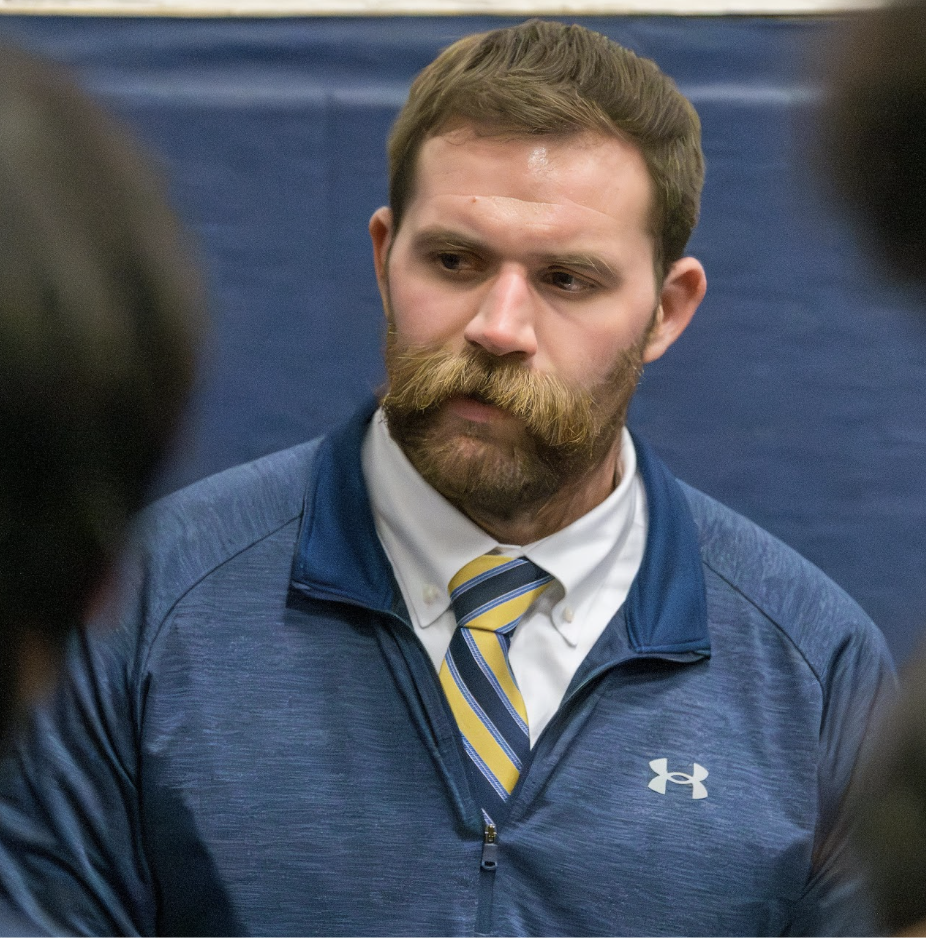
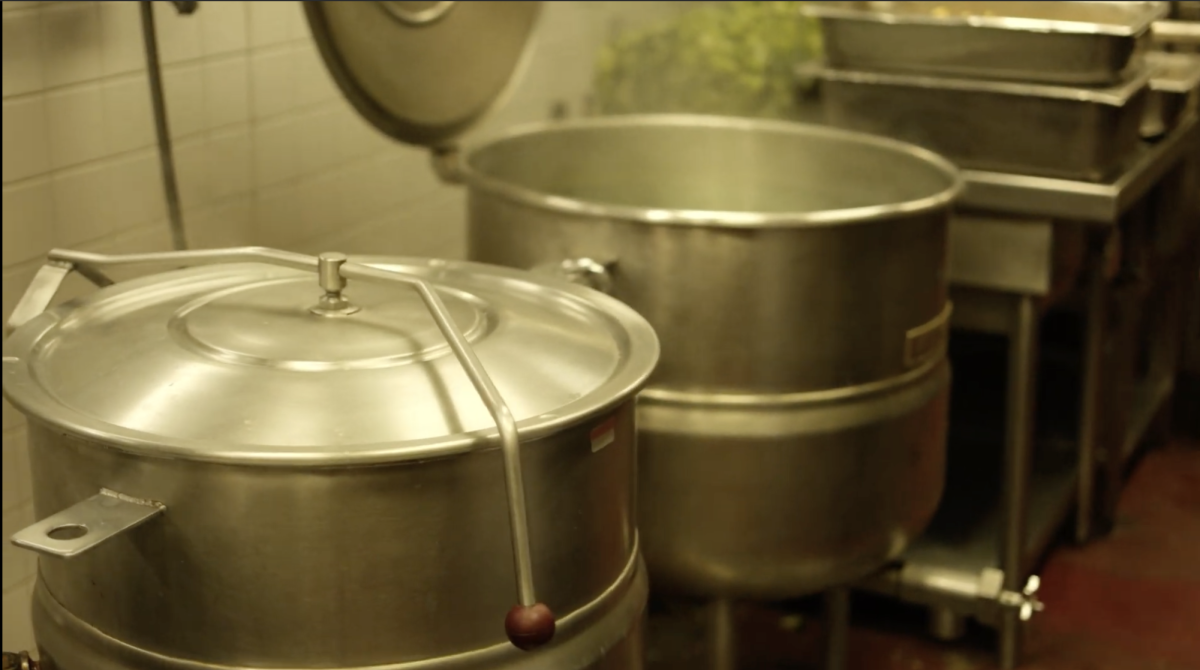

































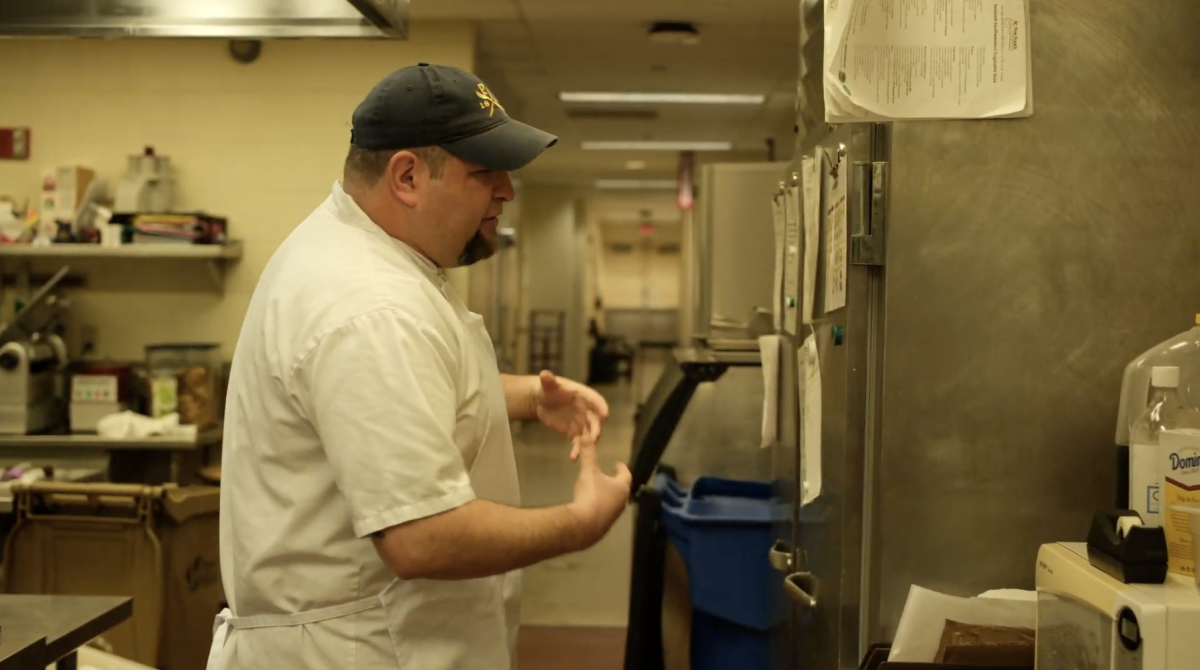
Peddie students and faculty rely on PFS for their breakfast, lunch and dinner. PFS, short for Peddie Food Service, has been serving us delicious, balanced meals for a long time. However, as much as PFS works to keep us healthy and well-fed, it also supports sustainability initiatives for the environment, striving to remain responsible to the community that surrounds us. Peddie Environmental & Sustainability Team (PEST), a Peddie club aiming to establish and maintain sustainability measures within Peddie, teamed up with The Peddie News to interview Chef Stahl in an attempt to dig deeper into PFS’s environmental policies.
Composting
PEST: How many years has PFS done composting?
Chef Stahl: I think the amount of years we’ve been doing composting is probably close to about eight years now. It started when I was sous chef here, and it came out of nowhere … And we didn’t really understand it at the time, because of the way we dispose of our garbage, [but] it’s become a great initiative. It has taken a lot of time to catch on, but right now, I would say we’re doing it at its best and most optimal right now with the least amount of waste being thrown out.
PEST: How exactly does the composting process work?
Chef Stahl: [A company] comes twice a week and they retrieve the old items that we have in the cans, and they bring us eight new cans. And then they’re washed. They’re perfectly clean. And then we set them up, one in the dining hall and one in our kitchen that we use, and we throw any food waste or paper waste inside those. And then they come and get picked up [by] the company. And then they take them and use them in various ways.
Waste Management
PEST: How much waste do we produce per week? And how do you use the leftovers that come from meals?
Chef Stahl: I would definitely say we do not produce a lot of waste, because you guys eat so much of the food, which is fantastic … We can tell what you guys like by how heavy the garbage bags are at the end of lunch or at the end of dinner, because if the bags [are] normally almost empty, that means you guys are eating things, and you’re composting correctly … By law, I can only reheat items once. So let’s say on Monday, if we had Spanish macaroni, I could then run it again on Wednesday, one time. I have to heat it up to an internal temperature of 185 degrees, and then after that, I have to throw it out.
PEST: Logistically, how do you keep track of how much we consume, and how does that determine how much you guys cook? Do you have any numbers on that?
Chef Stahl: Yes, there are several ways I can do that. I get a descending dollar report from my two major companies. So there’s a class I do every year for Ms. Black, where I can tell you how much chicken nuggets and meat we produce. I can tell you it’s over tonnage. If any of you kids have been in those classes, I have [that] information on hand at all times. But we also have a prep log that we start every lunch or dinner, that we start with the beginning number of how much we’re going to prep, and then what’s left over. So we’re able to track how much we use, and how much was left over. And then the next time we run this item, we can tell how much we should either prep more or prep less of, so we’re not going into waste.
PEST: Why does PFS discourage taking food out of the dining hall?
Chef Stahl: [The] reason why PFS discourages food leaving the serving area or the dining hall is because after four hours, your food is going to start to turn, and then that’s when bacteria grows … You’re going to get food poisoning. You’re going to get an upset stomach, and we can’t control that. And the first thing, unfortunately, you’re going to think is, “Oh, I got food poisoning from [Peddie] food service.”
And then also waste: A lot of time, food, when it does get taken from here, you’re not going to eat it. Then you just throw it away, or you have it in your container. Now you’ve changed your mind, and you want to DoorDash and get something from Dunkin’ Donuts or from Mannino’s, and then you’re going to waste. So those are the two main reasons: waste and also [to] make sure it’s handled properly.
Community Involvement
PEST: Most of the produce for meals comes from local farms. What percentage would that be, and how do you figure out where to source these ingredients from?
Chef Stahl: I would probably say about 65% of our produce comes from local farms. The rest does come from the Philadelphia and New York markets. We use two companies for our produce. We use Licciardello Brothers out of Trenton, and they go to New York and Philadelphia. I get them six days a week. I can call them as late as three in the morning, and it will be here the next day, because they have people who work there who pick for them.
And then we started with a new company called Common Market, who actually then themselves go to all the farms in the tri-state area and whatever is in season and whatever they can get, they print out a list, and then I can get from them weekly. Unfortunately, for the amount of volume that we do, it’s just not feasible for me to do it. So by using this company, we can get things from East Windsor. We get loads of produce from Pennsylvania, South Jersey, North Jersey, Maryland, New York and in the Northeast as well.
PEST: You said most of the produce that you use comes from a farm source in Trenton. How do you figure out where to get the meat from, and where does that come from?
Chef Stahl: All of our meats come from my two major purveyors, which are Sysco Philadelphia and Performance Food Group of Elizabeth. So again, I’m great where we’re located. I get the pull from the New York markets and the Philadelphia markets. All of our large meats come from the Midwest, and we do not use or source any meat that comes from outside of our country, just because I’m not a big fan. They have different regulations. So we use what the USDA does. We follow those guidelines. So all of our beef will come from the Midwest. There are about five massive producers, and our chicken is the same thing, all come from the Midwest, and they’re usually all owned by about five companies. And the companies I order from have their own specs, and they have their own guidelines, so I know everything’s coming in correctly. And then also, when food comes in, we always temperature things. We check for quality, especially when it comes to seafood; if we don’t like it, we send it back.
Calls for Action
Interviewer: What sustainability initiatives do you have for the future?
Chef Stahl: We’re going to definitely continue with the composting. We just recently changed our napkin to a different dispenser, where we’ve actually gone down from getting 5000 napkins a week to about 2500. We’ve actually cut our napkin usage in half with just one style of dispenser. We’re also looking at a redesign from three to five years from now. We will be working with the environmentalists on campus to better serve, and also what we’re doing is we’re touring other campuses… But when it comes to sustainability, everyone has to be all in, and that means everybody on campus, because I can only set the products and the spaces, but if people aren’t doing it correctly, then it doesn’t mean anything. But I will definitely give this year’s group credit; they didn’t need any training. When it comes to composting, it’s really become a thing, and that’s what you want on campus. You want it to constantly be a general practice that everyone’s involved in, and that’s how it works.
Interviewer: If there is one thing Peddie students can do to support sustainability in terms of PFS and food, what should they do?
Chef Stahl: What they should do is not be very upset when we say you can only have one entrée at a time … And then also try not to take as many cups, forks, knives and silverware away from the campus. Lastly, just good practices and composting, and just really just taking as much as you can eat.